
What Is Local SEO and Why Does It Matter?
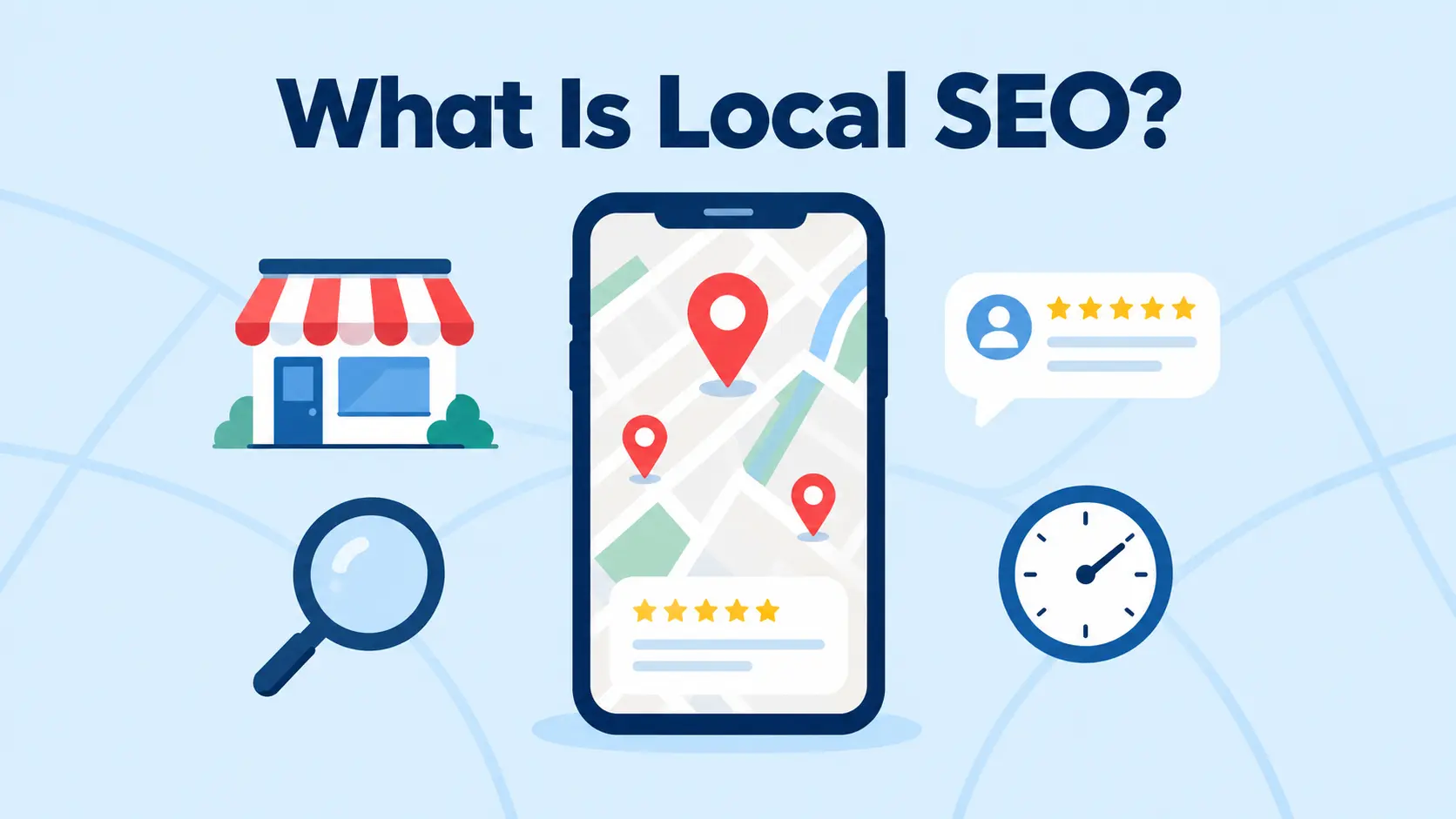
What is local SEO? It’s the work of making your business easy to find when someone searches for something nearby, whether they type “dentist in Kochi” or tap “bakery near me” while standing on the street. If you run a shop, clinic, salon, restaurant, gym or any business that serves a specific area, this is the kind of optimisation that decides whether the next customer calls you or your competitor.
This guide explains what is local SEO in plain words, clears up the local SEO meaning behind the jargon, shows how Google picks who appears on the map, and ends with a checklist you can start this week.
What Is Local SEO? A Plain-Language Definition
So, what is local SEO at its core? It’s a set of steps that helps your business appear in search results for people in or near your service area. That’s the short local SEO meaning. The longer version: it combines your online business listing, your website, your reviews and your location details so Google can confidently say, “this business is relevant, close by and trusted.”
Regular SEO asks, “Can this page rank for this topic anywhere?” Local SEO asks, “Can this business rank for this topic for this person, right here?” That small shift changes almost everything about how you work.
Anyone asking what is local SEO for a small shop should picture this. A tea stall in Thrissur doesn’t need to rank in Delhi. It needs to rank for the person walking three streets away. Local SEO explained in one line: it’s search optimisation with a map attached.
What Is Local Search and How Does It Work?
Before going deeper, let’s answer a related question: what is local search?
Local search is any search where the person wants something in a particular place. Sometimes they say the place (“physiotherapist in Edappally”). Sometimes they don’t, and the search engine works out the location from their phone or device. “Pharmacy open now” and “car repair near me” are both local searches, even though only one names a place.
Google reads that intent and changes the results page. Instead of only blue links, you’ll often see a map, a short list of businesses, star ratings, opening hours and a call button. Those are the results local SEO is built to win.
Local SEO Explained: How Google Decides Who Ranks
Understanding what is local SEO means understanding how Google ranks businesses, and here’s local SEO explained the way Google describes it. According to Google’s own guidance for business owners, local results are based mainly on three things: relevance, distance and prominence.
Relevance
Relevance is how well your listing matches what the person searched for. If your business category says “Dentist” and your description mentions root canals, you’re a better match for “root canal treatment” than a clinic with a blank profile.
Distance
Distance is how far you are from the searcher, or from the place named in the search. You can’t change where you’re located, but you can make sure your address is accurate. Many businesses lose ground simply because the pin on the map sits in the wrong lane.
Prominence
Prominence is how well known you are. Google looks at reviews and ratings, mentions across the web, links to your site and your overall search presence. A business with a steady stream of honest reviews usually looks more prominent than one with three reviews from two years ago.
What is local SEO if not a way to improve these signals? Here’s the useful part: relevance and prominence are things you can improve. Distance mostly isn’t, which is why the first two deserve your effort.
The Local Pack and Google Maps: Where Local Clicks Happen
When you search for a service in your area, Google often shows a box of three businesses with a map above the normal results. That box is the local pack. It’s prime real estate, because it answers the question before the person even scrolls.
Google Maps works in a similar way. People open it to compare options, check photos, read reviews and get directions. Both the local pack and Google Maps pull from the same source: your Google Business Profile, which is the main business listing Google uses for local results.
So if someone asks what is local SEO in practical terms, one honest answer is this: it’s the process of earning a spot in the local pack and on Google Maps for the searches that matter to your business.
Near Me Searches: Why Mobile Customers Matter
A big part of what is local SEO in daily life is being ready for these moments. Near me searches are the clearest example of local intent. Someone types “near me” because they want an answer now, from a place they can reach soon. They’re not researching for a month. They’re choosing.
If your business listing is incomplete, your hours are wrong or your phone number is outdated, you lose these customers without ever knowing they existed. That’s one of the quiet costs of ignoring local SEO. You never see the call that didn’t come.
So, Why Does Local SEO Matter?
Now that you know what is local SEO, here’s the second half of the question. Why does it matter, especially for a small business?
It reaches people who are ready to act. Someone searching “AC repair near me” isn’t browsing. They want a technician today. Local search often carries this kind of urgency.
It levels the field. A neighbourhood business can’t outspend a national brand on advertising, but it can win locally because it’s closer, better reviewed and more relevant to the area.
It builds trust before the first call. Your listing is often the first thing a customer sees of your business. Photos, reviews and accurate details on your listing work like a shop window. People judge you before they speak to you.
It’s measurable. You can track calls, direction requests and website clicks from your profile, so you know whether the effort is paying off.
It supports word of mouth. Customers who hear about you from a friend will usually search your name. What they find confirms or weakens that recommendation.
What Is Local SEO Made Of? The Core Parts
If you’re wondering what is local SEO actually made of, think of five parts working together.
1. Your Google Business Profile
This is your main business listing. Claim it, verify it and fill in every field: business name, category, address, phone, hours, services, photos and a short description. Choose your primary category carefully, because it tells Google what you are.
2. NAP consistency
NAP means name, address and phone number. Keep these identical everywhere they appear online: your website, social profiles and directories. Small differences like “Rd.” in one place and “Road” in another can confuse systems that match records.
3. Reviews
Reviews influence both ranking and the decision to contact you. Ask happy customers for them, and reply to every review, including the unhappy ones, calmly and specifically.
4. Local citations and directories
A citation is a mention of your business details on another site, such as an industry directory. List yourself on reputable ones that fit your trade and area.
5. Local content on your website
Create pages that mention the areas you serve, the services you offer and questions locals actually ask. A page titled for one service in one area usually works better than a vague homepage trying to cover everything.
A Simple Local SEO Checklist for This Week
You don’t need a big budget to begin, because what is local SEO if not a handful of basics done well? Work through this list in order:
- Search your own business name and note what Google shows.
- Claim and verify your Google Business Profile.
- Check the map pin, hours, phone number and category.
- Upload at least ten real photos of your place, team and work.
- Ask your last five happy customers for an honest review.
- Make your name, address and phone number match across the web.
- Add a clear page on your website for each main service.
- Embed your Google Map location on your contact page.
Do these properly and you’ve covered the essentials of what is local SEO in practice.
What Is Local SEO Compared With Traditional SEO?
The two overlap, but they aren’t identical.
| Traditional SEO | Local SEO | |
|---|---|---|
| Goal | Rank for a topic anywhere | Rank for a topic near the searcher |
| Main asset | Website pages | Business listing plus website |
| Key signals | Content, links, technical health | Relevance, distance, prominence, reviews |
| Where you appear | Standard results | Local pack, Google Maps, local results |
A strong website helps your local ranking, but a strong website alone won’t earn you the map.
Common Mistakes When Learning What Is Local SEO
- Leaving the profile half empty. Missing hours and categories cost you matches.
- Stuffing keywords into the business name. Google’s guidelines expect your real, public name. Adding extra keywords can get a listing suspended.
- Ignoring reviews. Unanswered feedback looks like nobody is home.
- Using a fake address. Virtual offices and made-up locations break the rules and put your listing at risk.
- Treating it as a one-time job. Hours change, customers leave reviews and competitors improve. Check in monthly.
How Long Does Local SEO Take?
Honestly, when people ask how long local SEO takes, the answer is: it depends. A new profile with missing details can improve quickly once you fix the basics. Competitive areas, like a busy city centre with dozens of similar businesses, take longer. Reviews, links and reputation build steadily, and nobody can promise a specific timeline or a guaranteed top spot. Treat anyone who does with suspicion.
Frequently Asked Questions About What Is Local SEO
What is local SEO in simple words?
In short, what is local SEO? It’s how you help your business appear when people nearby search for what you offer. It focuses on your business listing, reviews, location details and local website content so Google can match you with the right searchers.
What is the local SEO meaning for a small business?
For a small business, the local SEO meaning is simple: being visible to customers in your area at the moment they’re looking. It’s often the cheapest way to get found by people who are close and ready to buy.
What is local search, and is it the same as local SEO?
Local search is what the customer does. Local SEO is what you do to be found. One is the behaviour, the other is the optimisation work that responds to it.
Do I need a website for local SEO?
A website helps a lot, but a well-built Google Business Profile can already bring calls and visits. Ideally you have both, because they support each other.
How do I appear in the local pack?
Anyone learning what is local SEO should start with a complete, verified business listing, accurate details, steady reviews and relevant content on your site. There’s no way to pay for a position in the local pack, so consistent basics matter most.
How often should I update my Google Maps listing?
Update it whenever something changes, such as holiday hours, new services or a new phone number. Even without changes, add fresh photos and respond to reviews regularly.